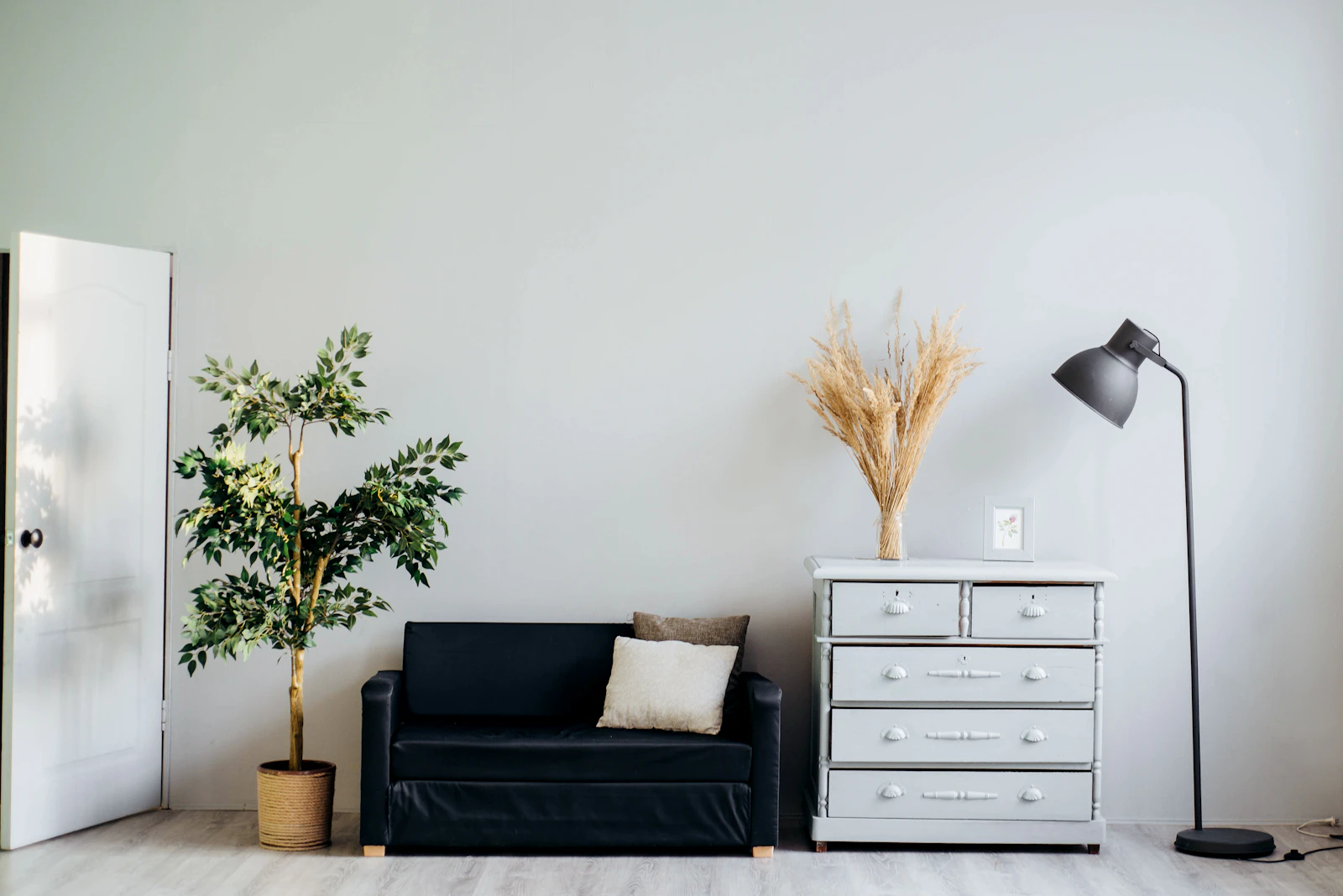
Almost every client conversation starts the same way: "the north side doesn't get good light." It's a fair worry — north light has a reputation in Indian homes as the consolation orientation, the one you design around rather than for.
It's also mostly wrong. North light is the most consistent light there is — flat, even, and free of the harsh midday glare that east and west-facing rooms fight for half the year. The problem usually isn't the orientation. It's three layout habits that quietly choke off whatever light a room does get.
1. Heavy drapery on every window
Full-length blackout curtains make sense for a bedroom. On a living or dining window, they're often there out of habit rather than need. A sheer layer plus a single solid panel for privacy lets a room breathe light all day instead of trapping it behind fabric from 6pm onward — and 6am.
2. Furniture pushed against the light source
The instinct to keep the centre of a room "clear" often means sofas and storage units end up backed against the window wall — exactly where they block the most light from travelling inward. Pulling furniture even 18 inches off that wall changes how a room reads within a week.
"We didn't add a single new window. We just stopped fighting the ones we had." — From a recent walkthrough in Sector 50, Gurugram
3. Dark grout, light tile
A pale floor with dark grout lines reads as a grid from across the room, which visually breaks up exactly the continuous surface that bounces light deepest into a space. Matching grout to tile — even a shade lighter — lets the floor work as one reflective plane instead of a chequerboard.
None of this requires a renovation. On most projects, we test these three changes in a single afternoon before touching anything structural — and more often than not, the "bad light" problem turns out to have been a furniture problem all along.